Commercial · Cambridge
Panic & Exit Hardware
Someone at the front counter always has to unlock the side door by hand before the lunch rush, because the round doorknob out there was never meant to be an exit for a room this size.
Panic & Exit Hardware
In plain words
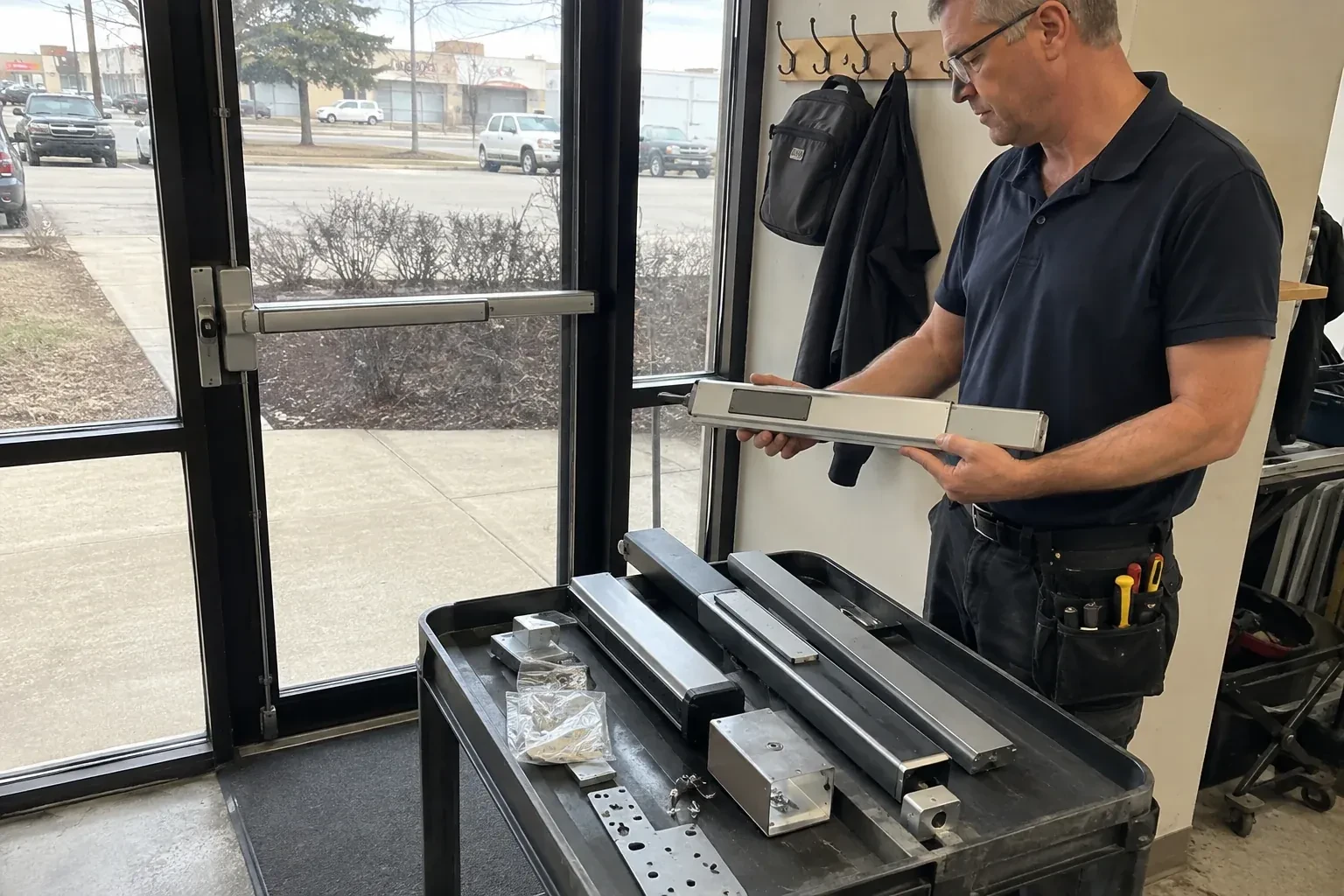
Panic and exit hardware installation fits a commercial door with a device that releases the latch the moment someone pushes on it from the inside, so the room's occupants are never asked to find a key to leave. The locksmith works from the room's occupancy and the door's fire rating first, then chooses a rim, mortise or vertical-rod device to suit the opening, pairs it with outside trim that still controls entry, and tests the release force and the latch before handing the door back. Any electrified addition, such as an alarm or a link to access control, is fitted once that basic function is confirmed.
How the visit goesThe crossbar on the loading-dock door barely returns anymore. Someone has to lean into it with a shoulder, and twice this month it has stuck half-latched, propped by whatever was nearest.
Cambridge
How the visit goes
Is this door part of a pair?
Single doors and pairs get assessed differently from the first look. On a pair, the locksmith checks whether a mullion currently splits the opening, whether a coordinator is already fitted, and whether the leaves close independently or in a set order. This decides whether the project is a straightforward device swap on each leaf or something larger, such as removing a mullion and fitting a compatible replacement latching arrangement to turn two narrow doors into one wide exit. Getting this right at the assessment stage avoids ordering hardware for a single door when the opening is really two leaves working together.
Fitting outside trim that still controls entry
The inside of the door stays simple: push to leave, every time. The outside gets whatever lets the right people in, a plain pull for a door nobody needs to unlock from outside, a lever with a key cylinder for staff entry, or a keyed cylinder alone where entry is occasional. Whichever trim is chosen, it operates entirely independently of the inside crossbar, so locking the outside never has any effect on a person's ability to leave from within.
A written record for the next review
The building now has a document naming every device fitted, its rating, the trim and any electrified function, and the tests each assembly passed on installation day. That record is what a fire inspector, an insurance reviewer or a new facilities manager will ask for, and having it ready saves reconstructing the history of a door from memory or from whatever sticker happens to still be on the case. It is worth keeping with the building's other life-safety paperwork.
Panic & Exit Hardware
In the van
- Dogging key or keyed cylinder
- Coordinator for door pairs
- Signage and labels
- Outside trim (pull, lever or cylinder)
- Through-fixings and mounting hardware
What affects the quote
Same fees day, night or weekend
1Number of openings involved
One door with a single device is the simplest case. A building with several affected exits, such as doors from a stairway plus an assembly-room exit, is quoted as the sum of each opening's own work.
2New preparation or existing cut-outs
A door with no prior hardware needs new holes cut and reinforced to the device's template. A door already prepared for a similar device, even an old one, is often a simpler fit with less new drilling.
3Access to the opening
A ground-floor commercial door is straightforward to reach. An opening behind scaffolding, up a stairwell with no elevator, or in a space still under active construction takes longer to work at.
Panic & Exit Hardware: questions
Can a padlock or extra deadbolt stay on a door that has this hardware?
No additional fastening should stay on an exit door that does not release the same way the primary device does. A hasp, padlock or separate deadbolt added at some point for extra security is a common finding on an older door, and removing or replacing it with something that releases under the same push is part of bringing that opening back to a single, reliable exit.
Who is responsible for keeping the hardware compliant?
The building owner or the party the owner assigns, often a facilities manager, is responsible for keeping exit hardware in working order and for the fire door assembly testing that goes with it. A locksmith installs and services the hardware and can keep records on the owner's behalf, but the ongoing duty to maintain the assembly sits with whoever holds the building.
Can I still lock the door from outside?
Yes. The releasing device only governs the inside of the door; the outside gets its own trim, a pull, a lever with a cylinder, or a keyed cylinder alone, chosen for how that door is entered. Locking or unlocking that outside trim has no effect on the inside crossbar, which always releases the latch under a push, so entry security and exit function are handled as two separate questions.
Commercial Locks
- Master Key System DesignA new hire at the shop gets handed whatever spare key happens to be in the drawer, and it turns out…
- Access Control InstallationHead office wants a record of who opens the branch and when, tied to an actual name rather than a…
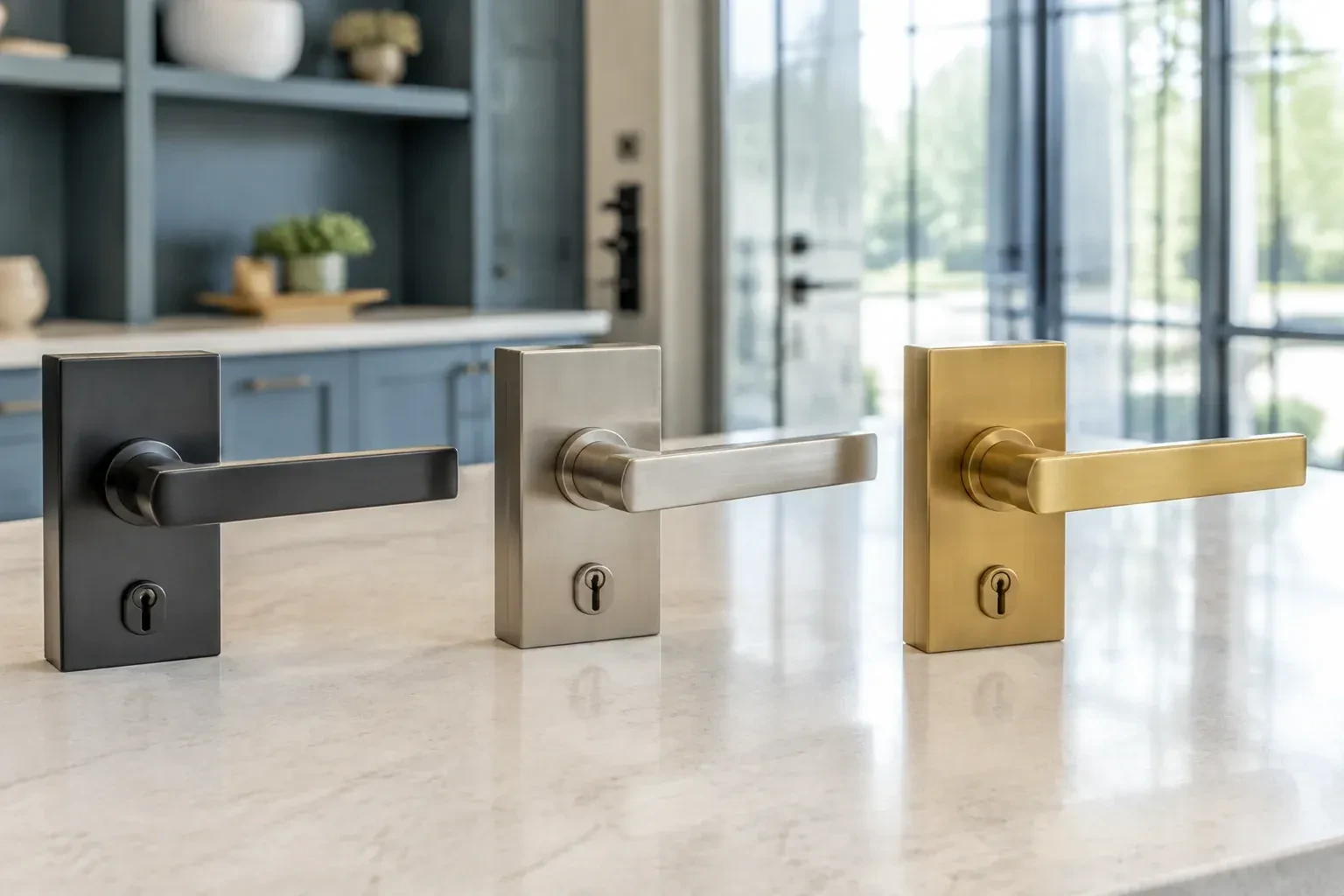
- Commercial-Grade Lock ReplacementOvernight someone forced the back door, and the cylinder face is scarred, the metal around the…
Panic & Exit Hardware near you
One team handles every service on this page for Cambridge, so a lockout can turn into a rekey, and a rekey into a properly set deadbolt, within the same visit if you want it. Each service is described separately below, but at the door they fit together as one piece of work.